
Enhanced AI is Changing Online Marketing Forever!
In today’s fast-paced digital world, businesses are constantly seeking ways to improve their efficiency and effectiveness. One significant change is the rise of intelligent systems that assist in managing various marketing tasks. These tools are not just for large corporations; they are designed to help small business owners, content creators, and teams manage their time better.
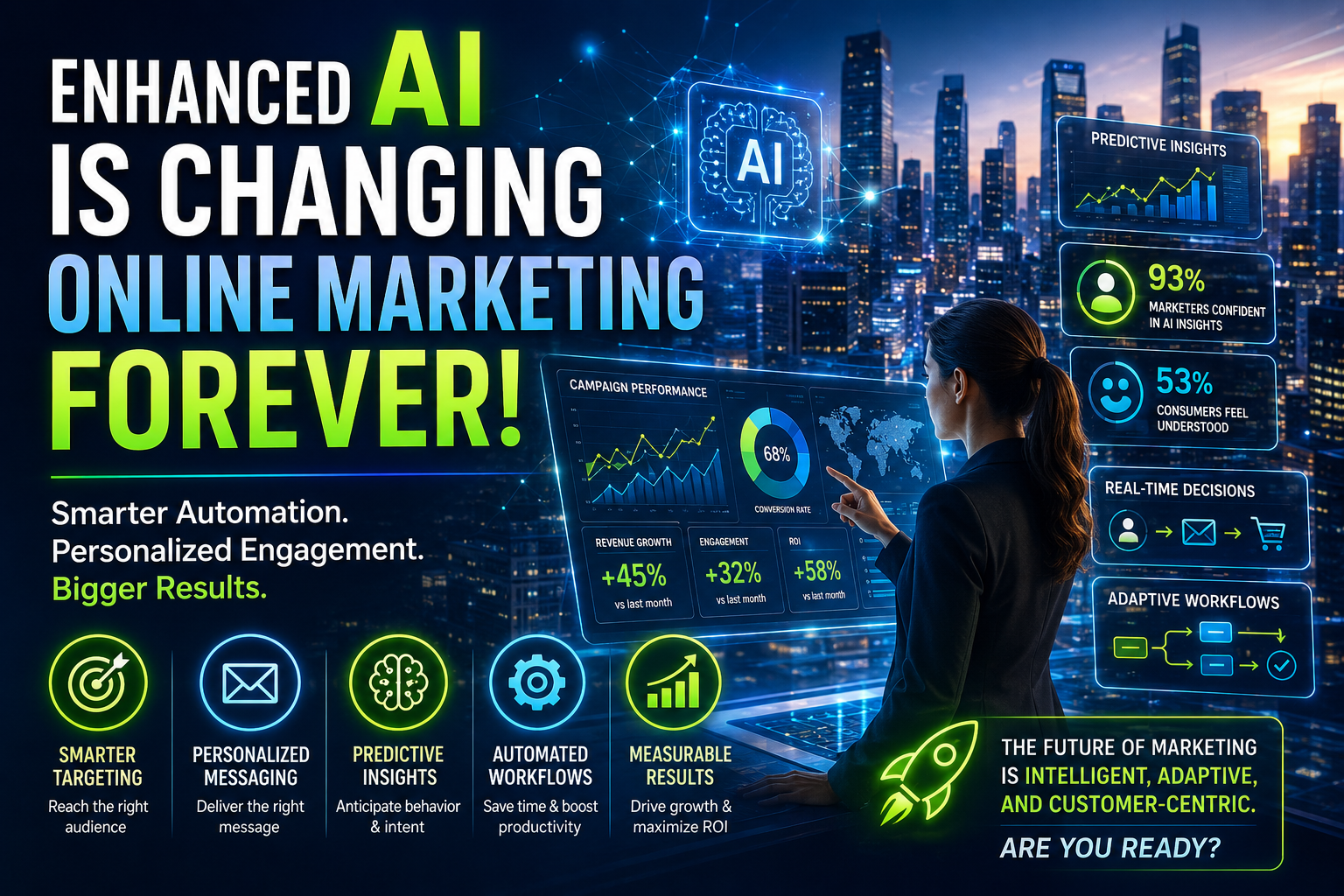
Recent studies reveal that a staggering 93% of marketing leaders believe these systems provide accurate customer insights. However, only 53% of consumers feel understood by brands. This gap highlights the need for improvement in how businesses utilize data to connect with their audience.
As we delve into this guide, I will explore strategies and tools that enhance workflows and improve customer engagement. By leveraging these insights, businesses can create personalized experiences while maintaining their creative touch. Let’s discover how these advancements can reshape your approach to reaching customers.
Key Takeaways
- Intelligent systems streamline marketing tasks for better efficiency.
- There is a notable gap between marketing leaders’ confidence and consumer perceptions.
- Data-driven insights can enhance customer engagement strategies.
- Automation allows teams to focus on creativity and strategy.
- Personalization is key to successful customer interactions.
Introduction to AI Marketing Automation
In a world where digital connections are paramount, organizations are seeking smarter ways to engage consumers. The shift from traditional methods to AI-driven marketing is not just a trend; it’s a necessity. While traditional automation follows fixed rules, like sending welcome emails, AI-powered systems analyze behavioral data to predict outcomes and tailor messages.
Understanding this shift is crucial. McKinsey reports that 71% of consumers expect personalized interactions. However, 76% feel frustrated when these expectations are not met. This highlights the need for brands to move beyond static segments and predetermined journeys.
- Rule-based automation can be limiting as customers navigate various devices and platforms.
- AI-driven systems continuously learn from customer behavior, enhancing engagement.
- Marketing teams can reclaim valuable time by automating repetitive tasks, allowing for a focus on strategy.
- AI improves the timing and relevance of messages, creating a more personalized experience.
The Current Landscape of Digital Marketing and AI

As the digital landscape evolves, brands are adopting innovative methods to engage their audiences. Today, marketers are using advanced platforms to unify customer activity across various channels, including websites, email, and social media. This comprehensive view allows for better understanding and targeting of consumer needs.
Machine learning plays a crucial role in this process. It transforms incoming signals into real-time insights about customer intent and preferences. For instance, Braze’s findings indicate a 93% confidence rate among marketers regarding AI-based preference predictions, while only 53% of consumers feel accurately understood.
Moreover, these insights help teams identify emerging engagement patterns before scheduled reviews. By connecting various platforms, marketers can respond to current customer behavior, ensuring their strategies are relevant and timely.
| Metric | Marketer Confidence (%) | Consumer Accuracy (%) |
|---|---|---|
| Preference Prediction | 93 | 53 |
| Real-Time Insights | 85 | 60 |
| Engagement Patterns | 90 | 55 |
👉 Access additional information here
Core Components of AI Marketing Automation
In the evolving landscape of digital communication, brands are leveraging technology to enhance customer interactions. A key player in this transformation is machine learning, which analyzes vast amounts of customer data. This includes website interactions, purchase history, and content engagement.
Machine learning can uncover patterns that might be missed by human analysis. For instance, it can determine that a specific customer segment responds better to emails sent on Tuesday mornings. Such insights allow for better timing and increased engagement.
Predictive analytics also plays a vital role. It estimates conversion likelihood, disengagement risk, and product interest. This helps teams tailor their campaigns effectively. By utilizing dynamic content and personalized offers, brands can deliver relevant messages to their audience.
| Component | Function | Benefit |
|---|---|---|
| Machine Learning | Analyzes customer behavior | Identifies patterns for targeted campaigns |
| Predictive Analytics | Estimates engagement risks | Enhances campaign effectiveness |
| Dynamic Content | Personalizes user experience | Increases conversion rates |
Effective Integration with CRM and Customer Data
The synergy between CRM systems and customer data is vital for brands aiming to elevate their marketing strategies. Integrating these systems provides access to essential customer history, purchase data, and engagement records. This integration allows for more informed decision-making and personalized marketing efforts.
Real-time profile updates enable workflows to respond promptly when customers browse, purchase, or contact support. This responsiveness is crucial for enhancing customer satisfaction and engagement.
Moreover, utilizing first-party behavioral data—such as browsing habits and email interactions—ensures that personalization is based on actual customer behavior rather than incomplete demographic assumptions. Responsible data practices are essential; brands must prioritize consent-driven collection and maintain transparency to comply with privacy regulations.
By connecting CRM platforms, teams can reduce data silos and coordinate consistent experiences across all channels. This integration not only streamlines workflows but also enhances overall performance.
Real-Time Decisioning and Adaptive Workflows
In the dynamic realm of digital interactions, businesses are harnessing technology to make smarter decisions. Real-time decisioning is a game-changer. It determines the best action, message, channel, timing, frequency, and incentives tailored for each individual customer.
For instance, AI can identify critical signals such as cart abandonment or declining engagement. These insights enable teams to act swiftly, preventing lost conversion opportunities. Automated actions can trigger workflows across various platforms through seamless integrations and APIs.
Adaptive workflows further enhance campaign performance. They adjust email timing, channel selection, and offers based on live customer behavior. This individual-level decisioning is essential, as it outperforms static segment rules that often miss the mark.
| Action | Purpose | Benefit |
|---|---|---|
| Real-Time Decisioning | Determines next-best action | Increases engagement rates |
| Automated Actions | Triggers workflows | Reduces manual intervention |
| Adaptive Workflows | Adjusts based on behavior | Enhances campaign effectiveness |
Enhancing Campaign Performance Through Predictive Insights

In the ever-evolving landscape of digital engagement, teams are increasingly leveraging predictive insights to optimize their campaigns. This approach allows marketers to anticipate outcomes and adjust strategies in real-time, leading to improved performance.
For instance, machine learning continuously evaluates various elements such as creative content, audience segments, and delivery strategies. This ongoing analysis enables teams to identify which combinations yield the best results. Adobe’s Emily McReynolds shared an example of a finance company that transitioned from launching one campaign every eight weeks to executing four campaigns in under six weeks.
Moreover, these systems can deprioritize underperforming variations, redirecting resources toward strategies that produce stronger conversion rates or lower acquisition costs. By connecting predictive optimization with shorter feedback cycles, teams can reduce waste and achieve more measurable outcomes.
For further information, please click here:
| Action | Outcome | Benefit |
|---|---|---|
| Predictive Insights | Anticipate campaign performance | Informed decision-making |
| Machine Learning | Continuous evaluation | Enhanced strategy effectiveness |
| Resource Allocation | Focus on high-performing campaigns | Improved conversion rates |
AI Marketing Automation: Revolutionizing Campaign Efficiency
In an era of rapid technological growth, companies are rethinking their marketing tactics to boost effectiveness. The emergence of agentic AI is changing how teams operate, making workflows more efficient. Gartner predicts that by 2028, 33% of enterprise software will integrate this advanced technology, a significant leap from less than 1% in 2024.
Agentic AI combines machine learning, natural language processing, and APIs to automate tasks. This technology can analyze data, select next steps, and perform actions with minimal human input. For instance, these systems can monitor customer engagement, generate personalized messages, and adjust budgets in real-time.
Marketers should set clear objectives while maintaining oversight on crucial decisions. By leveraging agentic AI, teams can enhance their campaign performance and streamline their workflows, ultimately leading to better outcomes and higher conversion rates.
Advanced Segmentation and Personalization Strategies
As brands strive for greater personalization, innovative segmentation strategies are becoming essential. These strategies allow businesses to tailor their messages more effectively, ensuring that they resonate with their target audience.
Dynamic audience segmentation techniques utilize hundreds of behavioral variables. This approach goes beyond manually updated groups, allowing for real-time adjustments. For example, when users browse, click, or abandon carts, their segments can update automatically.
Moreover, AI-powered lead scoring ranks prospects based on their likelihood to convert. This helps teams identify high-intent buyers for timely outreach. Here’s how these strategies can enhance engagement:
- Dynamic segmentation leverages behavior patterns to create micro-segments.
- Repeated product views can automatically elevate users into high-intent segments.
- Lead scoring prioritizes prospects according to their engagement history.
- Personalization is achieved through tailored recommendations and content.
- Lifecycle signals connect onboarding, conversion, and retention strategies.
For further information, please click here:
| Technique | Description | Benefit |
|---|---|---|
| Dynamic Segmentation | Updates segments based on real-time behavior | Increases relevance of messages |
| Lead Scoring | Ranks prospects by conversion likelihood | Focuses outreach on high-intent buyers |
| Personalization | Customizes content and offers | Enhances customer experience |
The Role of Data-Driven Decisions in AI Marketing
In the modern age of digital communication, the power of data-driven decisions is reshaping how brands connect with their customers. This shift turns data from a passive reporting resource into an active input for campaign and customer decisions. As IBM’s Pierre Charchaflian noted, AI will bring “disruption” and “advancement” through more creative personalization and customer delivery.
Today, marketing roles increasingly emphasize data literacy, system oversight, and creative direction. According to Salesforce, 71% of employees believe that generative technology will eliminate time-consuming manual tasks, allowing teams to focus on strategy and problem-solving.
However, responsible use of data is essential. Brands must prioritize transparent data collection, consent mechanisms, and governance policies. Clear communication about automated decisions is vital to maintain trust with customers.
In this evolving landscape, integrating data insights into workflows will optimize campaign performance. By understanding signals and outcomes, teams can refine their strategies and enhance customer engagement, ultimately driving better results.
Conclusion
As we navigate the complexities of digital engagement, the role of intelligent systems in marketing becomes increasingly crucial. These systems connect customer data, predictive analytics, and personalization into a responsive framework. By doing so, they empower teams to enhance campaign performance and reduce repetitive tasks.
Successful integration relies on accurate data, clear goals, and responsible governance. Marketers must maintain oversight while leveraging these technologies to ensure effective customer engagement. Additionally, the shift towards adaptive systems enables brands to learn from customer behavior, enhancing their strategies over time.
Ultimately, those who blend automation with creativity and strategic direction can improve their relevance and efficiency. This approach fosters long-term relationships with customers, ensuring brands remain competitive in a rapidly changing landscape.
FAQ
What is AI marketing automation?
AI marketing automation refers to the use of advanced technology to streamline marketing tasks, optimize campaigns, and enhance customer engagement through data-driven insights.
How can I benefit from using AI in my marketing strategy?
By integrating AI into my marketing strategy, I can achieve better personalization, improve campaign performance, and make data-driven decisions that lead to higher conversion rates.
What tools can I use for AI marketing automation?
Popular tools like HubSpot, Marketo, and Salesforce offer features that help automate marketing processes, analyze customer data, and optimize workflows for better results.
How does segmentation work in AI marketing?
Segmentation involves dividing my audience into specific groups based on behavior, demographics, or preferences, allowing me to tailor messages and offers for improved engagement.
What role does predictive analytics play in marketing?
Predictive analytics helps me anticipate customer behavior by analyzing past data, enabling me to create targeted campaigns that resonate with my audience’s needs and preferences.
Can AI help improve email marketing campaigns?
Yes, AI can enhance email marketing by optimizing send times, personalizing content, and analyzing engagement metrics to improve open and conversion rates.
How does machine learning contribute to marketing automation?
Machine learning allows systems to learn from data patterns, enabling me to automate tasks like lead scoring and customer segmentation, ultimately improving campaign efficiency.
What are adaptive workflows in marketing?
Adaptive workflows are flexible processes that adjust in real-time based on customer interactions and behaviors, allowing me to respond quickly to changing market conditions.
How can I measure the success of my AI-driven campaigns?
I can measure success through key performance indicators (KPIs) such as engagement rates, conversion rates, and return on investment (ROI) to evaluate the effectiveness of my campaigns.
Is AI marketing automation suitable for small businesses?
Absolutely! Small businesses can leverage AI marketing automation to streamline processes, enhance customer engagement, and compete more effectively in the digital landscape.
 Innovative AI Solutions For Achieving Sustainable Business Growth!